A freight shipment can change between the first quote request and collection. Another carton gets added, the delivery site changes its hours, or the final pallet is taller than expected. When those changes are not passed on, the arrangement may no longer describe the goods being moved.
The practical fix is a final pre-dispatch check. Focus on the information that affects the handoff, and ask the coordinator to review any change before pickup is treated as confirmed.
Check the final measurements
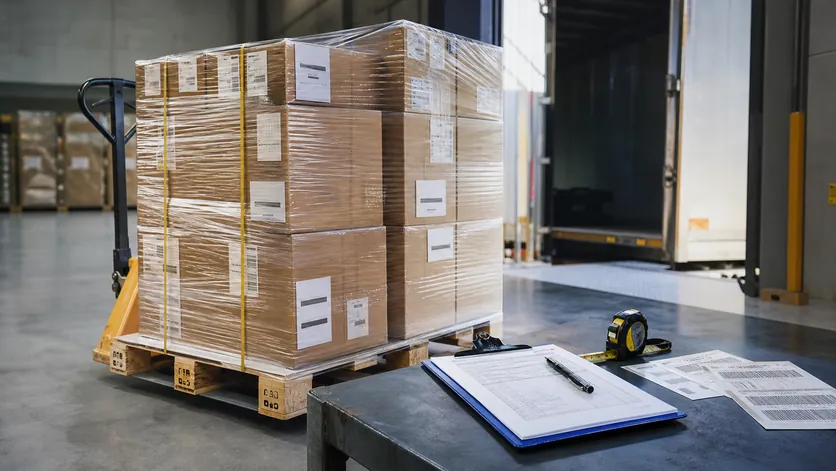
Measure the loaded pallet, not only the empty base. Include the packaging and record the actual weight where available. Keep different-sized pallets separate in the shipment description instead of averaging them into one figure.
An estimated weight can be useful for an early discussion, but label it clearly. Freight classification also needs the correct product information; the NMFTA classification overview explains why measurements alone are not the whole picture.
Review packaging before dispatch
Check that the base and packaging are appropriate for the load and that shipment labels remain readable. Look for damage, shifting cartons or an arrangement that needs professional packaging advice. Follow the requirements of the selected service; a general article cannot approve a particular packed load.
For a practical carrier reference, the FedEx Freight packing guides cover pallet choice, securing and labeling. Carrier-specific requirements must be checked for the actual booking.
Do not leave access details until arrival
| Omission | Before pickup |
|---|---|
| Assuming both sites have a dock | Ask each location how the freight will be loaded or unloaded. |
| Using normal hours for an appointment-only site | Confirm the appointment requirement and who is arranging it. |
| Giving only a company switchboard number | Provide a contact reachable during the movement. |
| Changing the destination informally | Get the revised address reviewed against the booking and quote. |
Describe liftgate needs, restricted access and other constraints during the inquiry. Whether a service is available or an extra charge applies depends on the confirmed arrangement.
Keep the paperwork aligned
Use the same addresses, quantities and references across the booking, labels and shipping documents. An old document can be confusing even when the cartons themselves are correct. Identify which version replaces earlier instructions.
For partial shipments, make the allocation explicit. For example, if five of eight prepared pallets are leaving, name the five rather than asking the pickup team to infer the selection.
Run a short dispatch check
- Final quantity, product description, dimensions and weight confirmed.
- Packaging reviewed for the selected service.
- Pickup and delivery access discussed.
- Required appointments and contacts confirmed.
- Documents match the current shipment.
- Any changes reviewed with the coordinator.
Use this checklist alongside your pallet freight request. If timing is fixed, also provide the ready time and delivery deadline through the time-sensitive freight service inquiry.