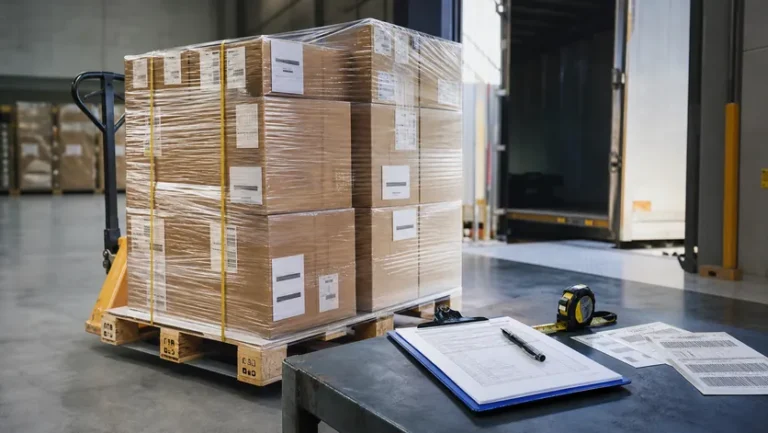
Urgent freight needs more than a fast response. The shipment must be ready to leave, the receiving site must be able to accept it and the proposed service must fit the actual deadline. Missing information at either end can undermine a plan that otherwise looks workable.
Start by separating what you need from what has been confirmed. A time-sensitive inquiry allows the team to review options; it does not by itself guarantee pickup, transit time or delivery.
Separate ready time from delivery deadline
The ready time is when the fully prepared freight can be collected. The deadline is when the recipient needs it. Provide both dates and times, including the relevant time zones, and explain whether each is fixed or flexible.
If goods are still being packed, do not describe them as ready now. If delivery must match a booked appointment, share that information rather than using a broad phrase such as “tomorrow morning.”
Send the shipment facts in one message
- Origin and destination, with complete site details when available.
- Pallet count, loaded dimensions, weight and goods description.
- Actual ready time and required delivery date or window.
- Loading and unloading arrangements at both locations.
- Any appointment, equipment or handling constraints.
- A reachable contact who can answer questions and approve next steps.
State which details remain provisional. A change in size, readiness or access can affect the options under consideration. Oversized or special-condition goods need explicit review, even when the request is urgent.
Confirm that the receiving site is ready too
A business address does not establish that someone can unload freight at any hour. Verify the receiving window, the right entrance, unloading arrangements and a contact who will be available. Ask whether appointments or booking references are required.
As an illustrative situation, goods may be ready at noon while the recipient accepts deliveries only during a booked morning window. The useful question is not simply how soon a vehicle can leave; it is which arrangement can meet the actual receiving condition.
Ask what the proposed service commits to
Review the equipment, pickup arrangements, delivery expectations and any outstanding conditions. Ask which times are estimates and which commitments are expressly included in the proposal. Do not infer a guarantee from the words “urgent” or “expedited.”
Also clarify the communication plan. Ask which updates are available, how they will be sent and whom to contact if the ready time or receiving appointment changes. Continuous live tracking should not be assumed unless it is specifically confirmed.
Prepare a change plan
Identify who can make decisions if packing runs late, a site closes or the recipient requests a different window. Keep that person’s contact information alongside the booking reference. Make revisions through the agreed contact so that pickup and delivery teams are working from the same information.
Before dispatch, recheck the final quantity, paperwork and labels. Good preparation still matters when time is tight; urgency is not a substitute for accurate shipment details.
Use the time-sensitive freight inquiry to share the requirement with PalletPoint. If your dates are flexible, say so—the team can review the request with that flexibility in mind.